Commercial water heater sizing
The inputs a designer needs to size central water heating for apartments.
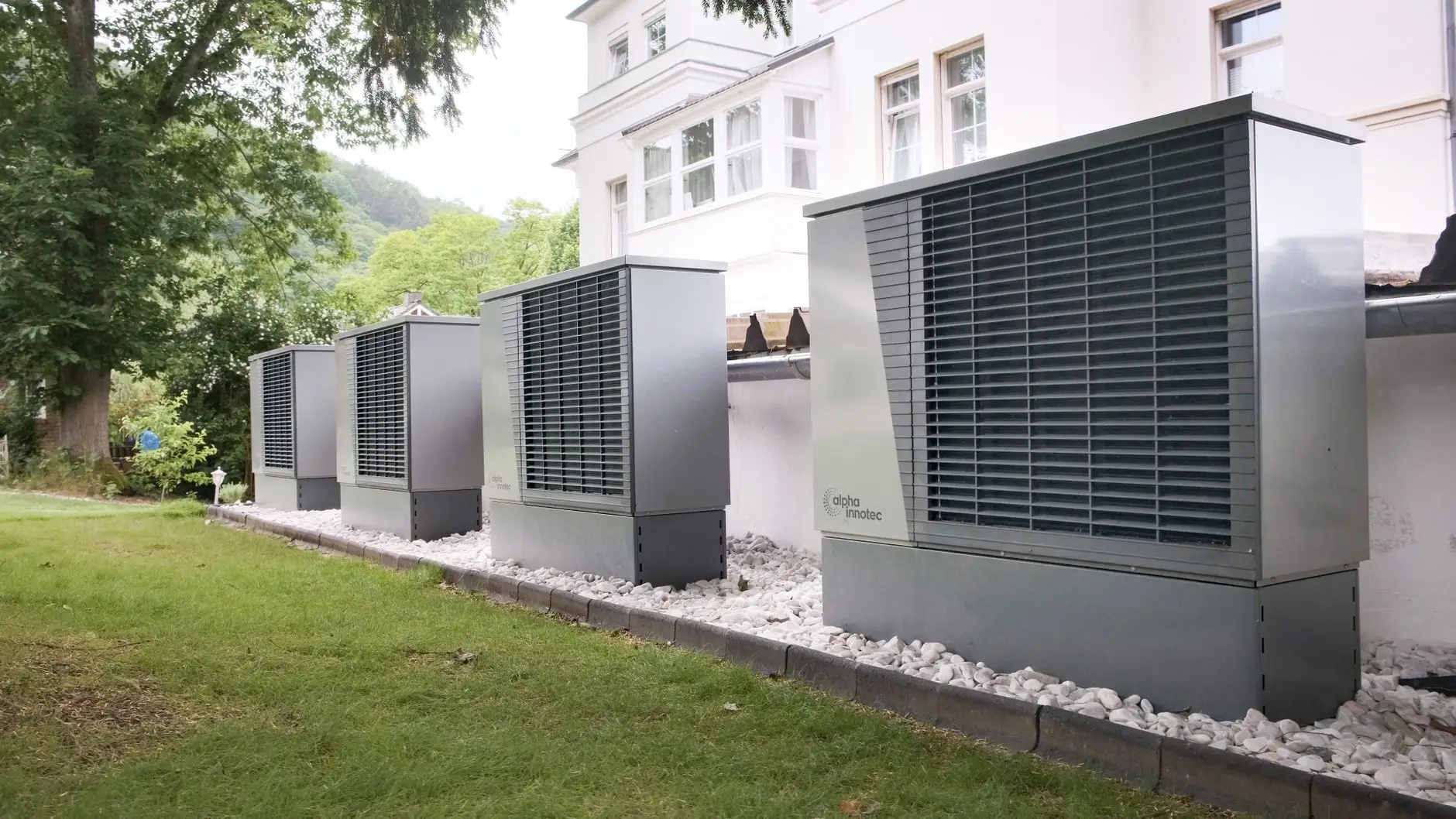
Electrifying a shared hot water plant means designing a system, not picking a tank. Heat pumps, storage and the recirculation loop have to work together through the busiest hours.
A commercial heat pump water heater moves heat from outdoor air into water using electricity. In an apartment building, several of them feed central storage that serves every unit, replacing a gas boiler or water heater plant.
Most heat pump water heater information online is about residential hybrid tanks: one tank with a heat pump on top, sized for one home. Those can work in individual apartments that already have their own heater.
A central system is different. Separate commercial heat pumps sit outdoors or in a ventilated room, storage tanks hold the hot water, and a recirculation strategy keeps it hot at distant units.
Manufacturers group central equipment in a few ways. Compare products using their published specification sheets for your design conditions, not marketing claims.
| Distinction | What it means for the project |
|---|---|
| CO2 (R744) refrigerant | Often used in split systems with outdoor heat pumps and indoor storage. Suited to heating water to high storage temperatures. Refrigerant choice is an engineering decision, not a reason on its own to pick a product. |
| Other refrigerants | Packaged commercial units using HFC or HFO refrigerants. Check operating limits and refrigerant rules for each model. |
| Single-pass | Heats cold water to storage temperature in one pass. Needs careful tank piping to keep storage stratified. |
| Multi-pass | Recirculates tank water through the heat pump, raising temperature gradually. Different piping and control approach. |
| Split vs packaged | Split systems separate the outdoor unit from indoor components; packaged units keep them together. This affects siting and refrigerant piping. |
Heat pumps heat more slowly than gas burners, so central systems usually lean on storage to cover peaks. The design has to balance heat pump capacity against tank volume.
Recirculation losses are handled separately. A common approach is a swing tank: a smaller tank, with its own heating, that keeps the return loop hot without disturbing the main storage. The right arrangement depends on the equipment and piping.
The commercial water heater sizing guide explains the inputs.
Electrical capacity is the question that most often decides feasibility. Resolve it early.
A heat pump uses electricity; a boiler uses gas. Which costs less to run at your building depends on your utility rates, time-of-use pricing and how the controls schedule heating around them. Ask for an operating cost estimate based on your own rates, and compare it against the gas plant you would otherwise install.
Programs for central heat pump water heaters open and close. Check the multifamily water heater rebates page for dated status before relying on one.
Yes, when it is designed for the building’s demand and distribution. A central plant uses several heat pumps, storage tanks and a strategy for keeping the recirculation loop hot. Storage and temperature maintenance are part of the sizing decision.
There is no single answer for all buildings. The selected equipment, any electric backup and the building’s existing loads set the requirement. An electrical load calculation shows whether the service, panels or utility connection need work.
No. Residential hybrid units are single tanks with a built-in heat pump, sized for one home. A central system for an apartment building uses separate commercial heat pumps, larger storage and a recirculation design.
The approved operating sequence, control settings, maintenance instructions and a clear explanation of fault alarms. Confirm training and documentation in the agreed scope.
The inputs a designer needs to size central water heating for apartments.
Replacing central or multi-unit water heaters in an occupied building.
Domestic hot water boiler options, staged cutover and temporary hot water.
What drives the price of a boiler or water heater replacement, and how to get a firm quote.
California programs to check, with dated status and an eligibility checklist.
The three ways apartment buildings make hot water, and how to choose.
Send the building details once. Qualified requests go to a California contractor partner for a free, no-obligation assessment and quote.
The assessment and quote are free, with no obligation. Tell us about the building and the hot water equipment that serves it. An uncertain equipment age is fine.
This form is not an emergency dispatch service. If hot water has stopped, use the building's existing maintenance contacts.